Arthroplasty & Joint Replacement

Total Hip Replacement (Hip Arthroplasty)

Restoring Pain-Free Walking in Advanced Hip Osteoarthritis & Avascular Necrosis

Op. Dr. Halit Ziya Postalcı
Op. Dr. Halit Ziya Postalcı Ortopedi ve Travmatoloji Uzmanı
6 min read
Updated: October 2026
Op. Dr. Halit Ziya Postalcı Tarafından İncelenmiştir
Key Clinical Takeaways
  • Comprehensive anatomic reconstruction of femoral head and acetabular socket
  • Muscle-sparing surgical approaches minimizing dislocation risks and tissue trauma
  • Early walking with minimal assistance or single cane by post-op Day 1
  • State-of-the-art ceramic-on-ceramic and cross-linked polyethylene bearing surfaces
Total hip replacement is universally recognized as one of the most clinically successful procedures in modern medicine. When the hip joint suffers structural devastation due to severe osteoarthritis (coxarthrosis), femoral head avascular necrosis (AVN), hip dysplasia sequelae, or fracture, Op. Dr. Halit Ziya Postalci delivers muscle-sparing anatomic arthroplasty designed for rapid postoperative stability and long-term durability.

Total Hip Replacement (Hip Arthroplasty) Nedir?

The hip joint functions as a high-load ball-and-socket mechanism formed by the acetabular socket of the pelvis and the femoral head. When degenerative wear destroys articular cartilage, or vascular impairment precipitates subchondral bone collapse (avascular necrosis), patients experience crippling groin, buttock, and radiating thigh pain. Routine functional tasks such as putting on shoes or climbing stairs become severely impaired. Arthroplasty reconstructs the joint with biocompatible implants.

Symptoms & Clinical Signs

Bu rahatsızlıkta hastalarımızın klinikte en sık ifade ettiği şikayetler ve fiziksel bulgular şunlardır:

Deep groin and anterior thigh pain frequently radiating toward the knee joint
Severe functional stiffness making putting on shoes or socks exceedingly difficult
Pronounced antalgic limp and marked reduction in maximum walking tolerance
Troublesome resting ache aggravated when rolling over during sleep
Perceived or real limb length discrepancy in late stages

Causes & Risk Factors

Hastalığın ortaya çıkmasında veya ilerlemesinde rol oynayan birincil faktörler şunlardır:

Primary coxarthrosis (degenerative hip joint osteoarthritis)
Femoral head avascular necrosis (post-steroid, ischemic bone collapse)
Adult sequelae of developmental dysplasia of the hip (DDH)
Femoral neck fractures and high-impact pelvic trauma
Untreated femoroacetabular impingement (FAI) causing premature labral breakdown

Diagnosis & Clinical Assessment

Clinical evaluation involves assessing painful restrictions in internal/external rotation and Trendelenburg gait signs. Bilateral pelvic and specialized hip radiographs detail joint congruence, subchondral cyst formation, and bone spurring. In early ischemia or suspected avascular necrosis, contrast-free pelvic MRI remains the gold diagnostic standard.

Treatment Options & Surgical Approach

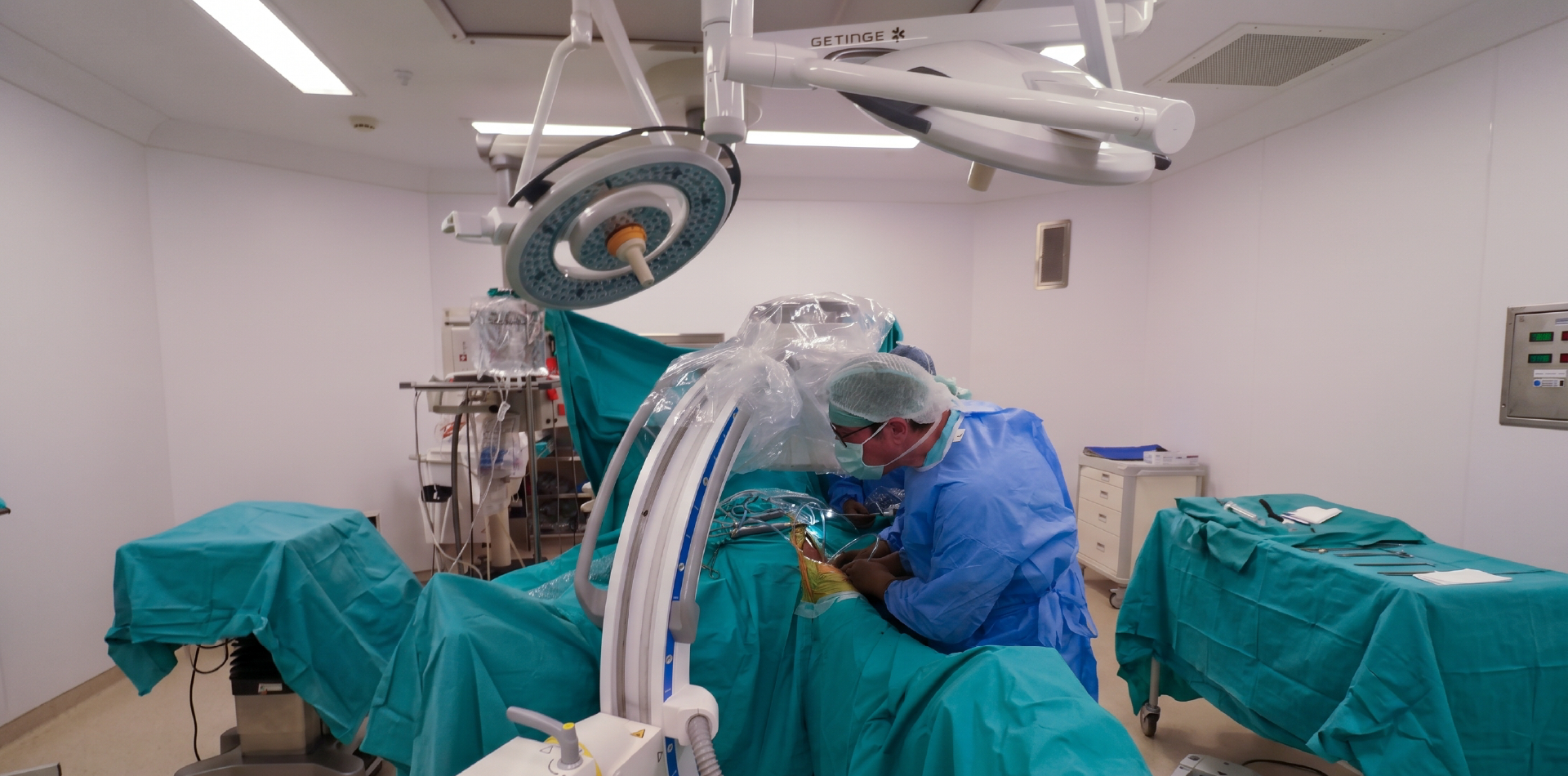
For advanced hip degeneration, total arthroplasty provides dramatic relief. The damaged femoral head is excised, and a press-fit biocompatible titanium stem is seated within the femoral canal. A titanium acetabular cup with ceramic or highly cross-linked polyethylene liner is secured in the pelvis, establishing a silent, frictionless joint articulation with rapid muscle recovery.

Recovery Timeline & Milestones

Uygulanan tedavi sonrasında beklenen aşama aşama klinik iyileşme periyodu:

Post-op Day 1
Assisted mobilization with walker within 12-24 hours; initiation of gentle isometric hip exercises.
Week 2
Wound inspection; transition to a single cane with independent home mobility.
Weeks 4 - 6
Cane discontinued; unassisted limp-free ambulation and clearance for driving.
Month 3 & Beyond
Muscular rehabilitation complete; full return to golf, swimming, cycling, and travel.
Op. Dr. Halit Ziya Postalcı's Clinical Note
"In hip replacement, flawless implant positioning and tailoring bearing technology to patient biology are crucial. We utilize premium ceramic-on-ceramic and trabecular titanium designs that permit lifelong stability. Patients rediscover the sheer freedom of walking pain-free without a limp from the very first month."
— Op. Dr. Halit Ziya Postalcı, Ortopedi ve Travmatoloji Uzmanı

Frequently Asked Questions

What precautions should be taken after hip replacement?
During the initial 6 weeks, avoiding extreme leg crossing and excessively low chairs ensures soft-tissue capsular healing.
What makes ceramic bearings preferable?
Ceramic components boast virtually zero wear rates, zero metal ion release, and exceptional durability exceeding 25+ years.
When can I return to employment?
Desk-based professionals generally return within 3 to 4 weeks, while physically demanding roles resume at 6 to 8 weeks.