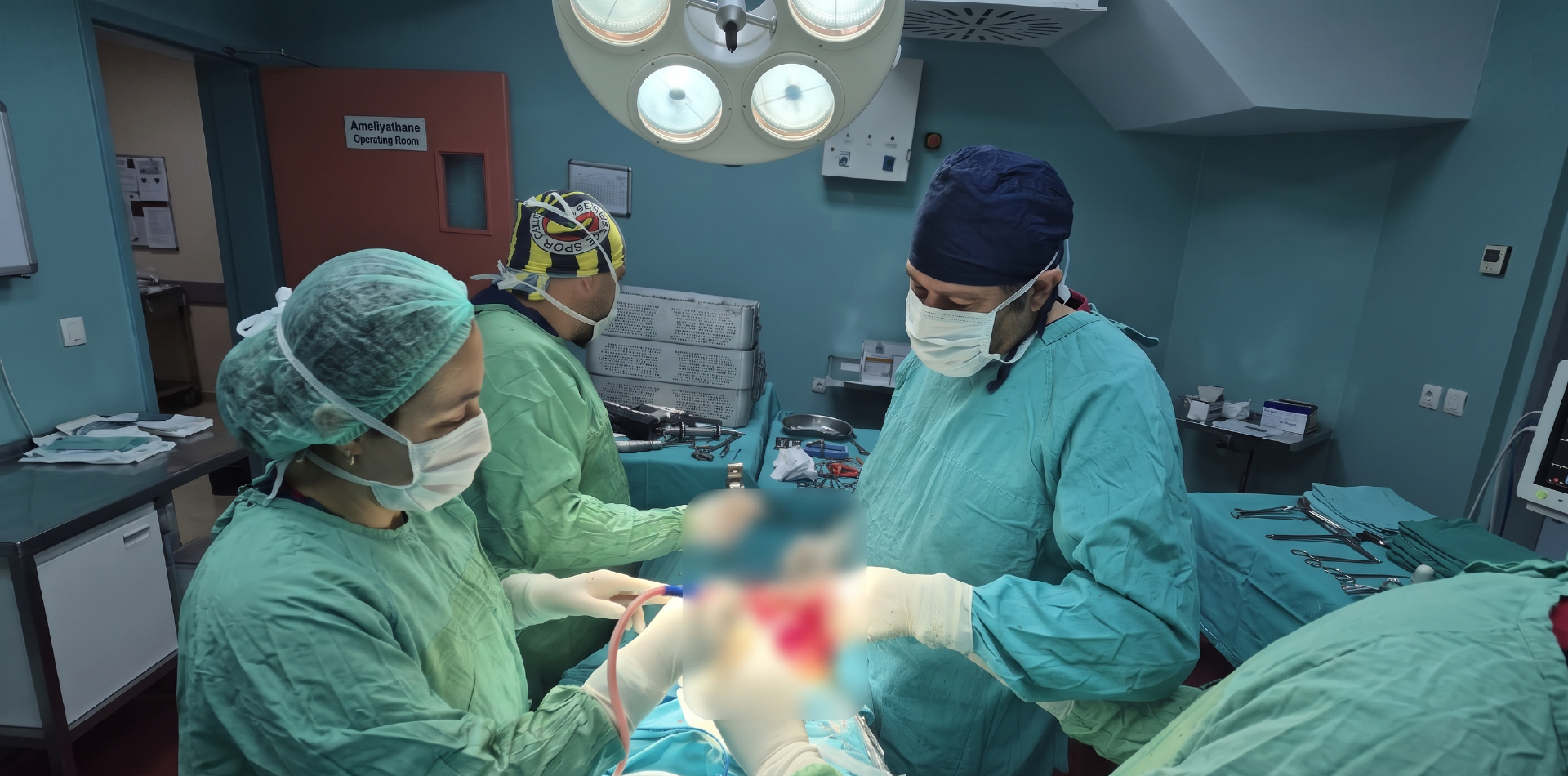
Total knee replacement surgery is the precision resurfacing and replacement of severely worn articular cartilage with bio-compatible titanium and high-durability polyethylene components. For patients suffering from end-stage osteoarthritis or trauma-induced joint destruction, Op. Dr. Halit Ziya Postalci utilizes tissue-sparing, minimally invasive techniques that enable same-day walking and accelerated functional recovery.
Total Knee Replacement (Knee Arthroplasty) Nedir?
The knee joint is the primary weight-bearing hinge of the human skeleton, connecting the femur, tibia, and patella. Degenerative osteoarthritis erodes the smooth protective hyaline cartilage, resulting in bone-on-bone friction, severe nocturnal pain, joint stiffness, and progressive angular deformities (bow-legs or knock-knees). When conservative pharmacotherapy, hyaluronic/PRP injections, and physical rehabilitation fail to provide relief, total knee arthroplasty provides definitive joint restoration.
Symptoms & Clinical Signs
Bu rahatsızlıkta hastalarımızın klinikte en sık ifade ettiği şikayetler ve fiziksel bulgular şunlardır:
Severe sharp knee pain provoked by walking, stair climbing, or weight-bearing
Persistent resting or nocturnal ache waking patients from sleep
Joint stiffness upon waking up and progressive limitation in flexion/extension
Visible axial angular deformity (varus bow-leg or valgus alignment)
Audible joint crepitus, grinding sensations, and periodic inflammatory effusions
Causes & Risk Factors
Hastalığın ortaya çıkmasında veya ilerlemesinde rol oynayan birincil faktörler şunlardır:
Age-related primary gonarthrosis (degenerative cartilage wear)
Excess body weight exerting 4-5 times amplified compressive forces per step
Previous intra-articular trauma, ligament tears, or historical meniscectomies
Inflammatory arthropathies such as rheumatoid arthritis
Genetic predisposition and baseline lower-extremity malalignment
Diagnosis & Clinical Assessment
Diagnosis begins with comprehensive clinical evaluation by Op. Dr. Halit Ziya Postalci, analyzing passive/active range of motion, ligamentous stability, and axial limb alignment. Weight-bearing bilateral orthoroentgenograms (standing X-rays) reveal joint space narrowing, subchondral sclerosis, and osteophytes. CT scans or MRI are utilized when pre-operative anatomical mapping or bone-stock assessment is warranted.
Treatment Options & Surgical Approach
Early stages may be managed with weight reduction, quadriceps physiotherapy, and intra-articular therapies. When joint integrity is structurally exhausted, total knee replacement is the gold standard. The worn cartilaginous bone ends are reshaped with micron precision, and biocompatible femoral and tibial implants are secured. An ultra-high-molecular-weight polyethylene bearing is placed between the metal components to provide fluid, friction-free movement.
Recovery Timeline & Milestones
Uygulanan tedavi sonrasında beklenen aşama aşama klinik iyileşme periyodu:
Day 1 & First 24 Hours
Mobilization with walker occurs 4-6 hours post-op. Active knee flexion/extension exercises are initiated.
Weeks 1 - 2
Independent indoor ambulation. Incision review at day 14 and progressive transition from walker to single crutch.
Weeks 3 - 6
Unassisted walking, stair navigation, and safe resumption of driving and desk-based work activities.
Months 2 - 3 & Beyond
Full muscular stabilization; unhindered return to swimming, brisk fitness walks, travel, and active lifestyle.
Op. Dr. Halit Ziya Postalcı's Clinical Note
"The greatest concern patients have regarding knee replacement is postoperative pain and fear of immobility. With contemporary tissue-sparing surgical dissection and multimodal analgesic protocols, pain is tightly controlled, enabling patients to walk just hours after surgery. Timely surgical intervention rescues individuals from chronic dependency and restores genuine vitality."
— Op. Dr. Halit Ziya Postalcı, Ortopedi ve Travmatoloji Uzmanı
Frequently Asked Questions
What is the anticipated lifespan of a knee prosthesis?
With modern ultra-durable polyethylene and bio-compatible alloys, contemporary prostheses consistently exceed 20 to 25+ years.
When will I be able to walk after surgery?
Mobilization begins on the very same day, typically 4 to 6 hours after surgery with assistive walker support.
How much knee flexion can I expect to achieve?
Our high-flexion implant designs enable patients to comfortably achieve 120 to 130 degrees of active flexion.
Can bilateral knee replacements be performed simultaneously?
Provided that systemic cardiopulmonary health and clinical evaluations are optimal, bilateral simultaneous arthroplasty can safely be completed.